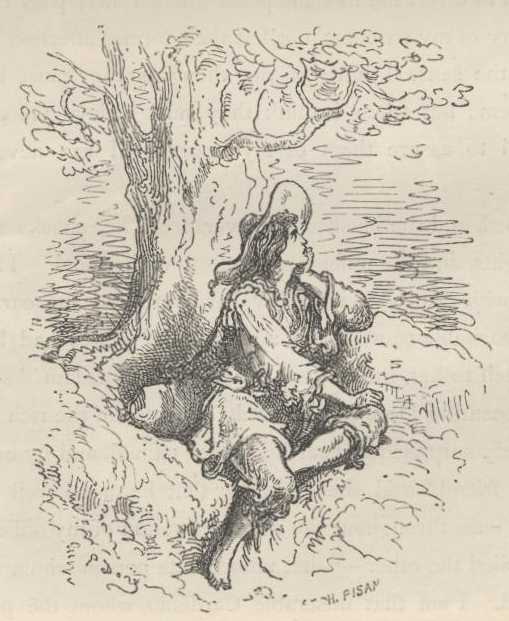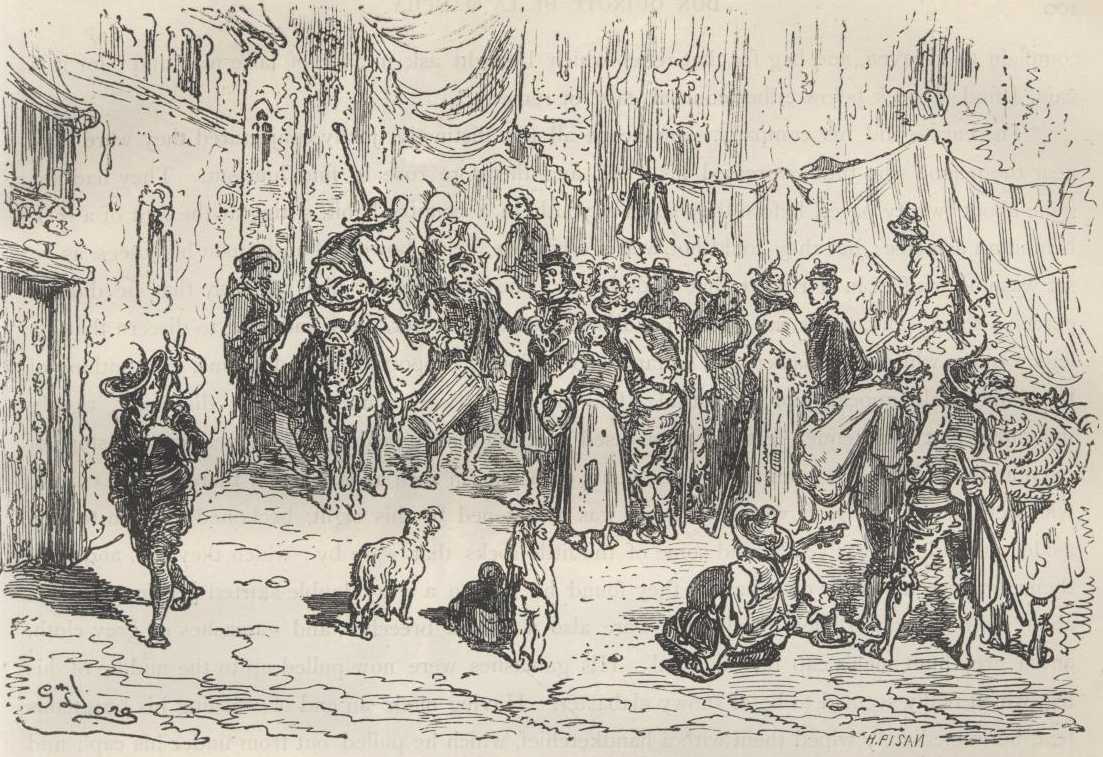

Thật hạnh phúc và may mắn thay cho những thời đại mà hiệp sĩ vô song Don Quixote xứ La Mancha được phái xuống trần gian; bởi nhờ quyết định cao cả của chàng là tìm cách phục hưng và khôi phục lại hội hiệp sĩ giang hồ đã mai một từ lâu và nay gần như đã diệt vong, mà giờ đây, giữa thời đại nghèo nàn về mặt giải trí thanh tao này, chúng ta không chỉ được thưởng thức câu chuyện có thật về chàng, mà còn cả những giai thoại và câu chuyện lồng ghép trong đó—những chuyện vốn dĩ cũng vô cùng thú vị, tài tình và chân thực chẳng kém gì mạch chính của tác phẩm. Trở lại với mạch truyện chính, sau khi đã chải chuốt và dệt nên câu chuyện, ta kể rằng vừa lúc thầy phó tế định cất lời an ủi Cardenio, ông bỗng bị ngắt lời bởi một giọng nói vẳng đến bên tai, cất lên những âm thanh đầy sầu thảm:
“Hỡi Chúa! Chẳng lẽ con đã tìm được một chốn có thể làm nấm mồ bí mật cho gánh nặng mệt mỏi của tấm thân mà con hằng câm nợ một cách bất đắc dĩ này sao? Nếu sự cô tịch mà những ngọn núi này hứa hẹn không lừa dối con, thì quả thực là như vậy; ôi, khốn khổ cho con biết bao! Xã hội của những mỏm đá và bụi cây cho phép con được than thở về bất hạnh của mình với Trời cao này, chắc chắn sẽ khoan khoái đối với tâm hồn con hơn biết bao so với bất kỳ con người nào trên cõi đời này, bởi chẳng còn ai trên thế gian để ta trông cậy xin lời khuyên trong lúc nghi ngờ, tìm sự an ủi trong nỗi buồn, hay sự cứu rỗi trong cơn hoạn nạn!”
Tất cả những lời này đều được thầy phó tế và những người đi cùng nghe rất rõ; và vì dường như chúng phát ra từ ngay gần đó, quả thực là vậy, họ liền đứng dậy để tìm kiếm người nói. Chưa đi được tới hai bước, họ đã phát hiện ra đằng sau một tảng đá, ngay dưới gốc cây tần bì, có một thiếu niên mặc trang phục nông dân. Họ chưa thể nhìn rõ mặt ngay lúc đó vì cậu ta đang cúi ngắm, ngâm chân xuống dòng suối nhỏ chảy qua. Họ đến gần lặng lẽ đến mức cậu ta không hề hay biết, bởi mải mê với việc rửa đôi bàn chân trắng ngần đến độ trông chúng tựa như hai khối lê ki ma tỏa sáng giữa những hòn đá suối. Vẻ trắng trẻo và đẹp đẽ của đôi bàn chân ấy khiến họ hết sức ngạc nhiên, bởi chúng trông không hề giống những đôi chân sinh ra để giày xéo đất cày hay theo đuổi lưỡi cày và đàn bò như bộ trang phục của chủ nhân gợi ý. Nhận thấy đối phương vẫn chưa chú ý đến mình, thầy phó tế đang đi đầu bèn ra hiệu cho hai người kia nấp sau mấy mảnh đá vụn ở đó; họ tuân theo ngay và chăm chú quan sát hành động của người thiếu niên. Cậu ta mặc một chiếc áo khoác ngắn màu nâu sẫm hai vạt, thắt chặt vào thân bằng một dải vải trắng; ngoài ra cậu còn mang quần dài và bít tất vải nâu, đầu đội chiếc mũ montera màu nâu; phần bít tất được kéo xắn lên tận giữa cẳng chân—mà thực sự trông chúng trắng ngợp như ngọc thạch thuần khiết.
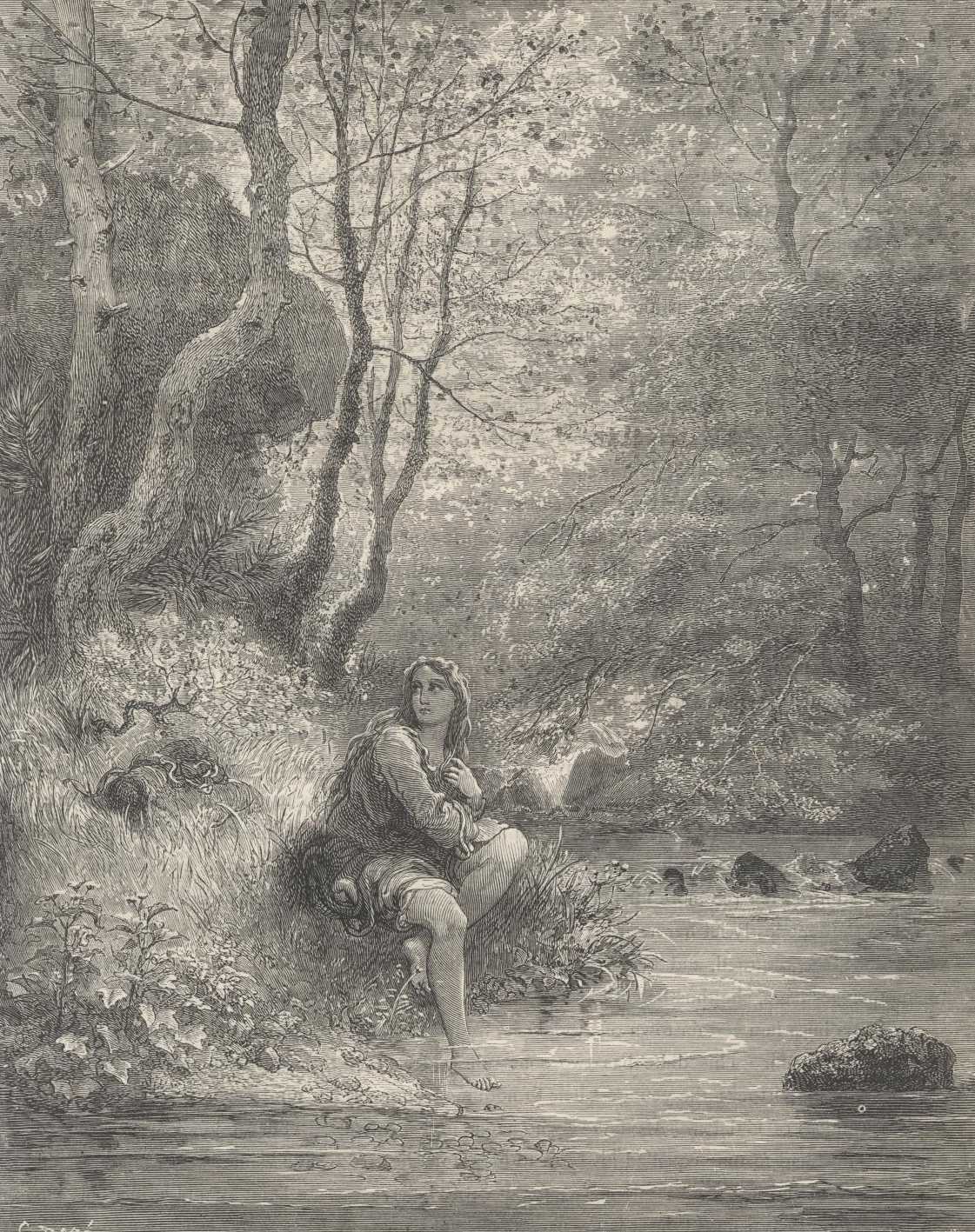

Ngay sau khi rửa xong đôi bàn chân đẹp đẽ, cậu ta dùng một chiếc khăn rút từ dưới mũ montera ra để lau khô. Khi cất chiếc mũ đi, cậu ngẩng mặt lên, và những ai đang quan sát liền có cơ hội chiêm ngưỡng một vẻ đẹp tuyệt mỹ đến nỗi Cardenio phải thì thầm với thầy phó tế:
“Nếu đây không phải là Luscinda, thì chắc chắn chẳng phải người phàm mà là một đấng giai nhân thần thánh.”
Người thiếu niên liền cởi chiếc mũ montera ra, lắc đầu qua lại khiến một mái tóc xõa tung và tuôn tràn ra, đến cả những tia nắng mặt trời cũng phải ganh tị; qua đó họ nhận ra rằng kẻ tưởng chừng là một nông dân hóa ra lại là một người phụ nữ kiều diễm, vâng, là người đẹp nhất mà mắt hai người họ từng được chiêm ngưỡng, hay thậm chí cả của Cardenio nếu như ông chưa từng gặp và biết đến Luscinda—bởi sau này chính ông đã tuyên bố rằng chỉ có sắc đẹp của Luscinda mới có thể sánh kịp với giai nhân này. Những lọn tóc dài màu hạt dẻ không chỉ che phủ bờ vai nàng, mà với chiều dài và sự suôn dày ấy, chúng che kín toàn bộ thân hình nàng bên dưới lớp thác tóc, khiến chẳng còn gì lọt vào mắt ngoài đôi bàn chân. Nàng giờ đây dùng đôi tay làm lược, và nếu như đôi bàn chân nàng trông như những mảnh lê ki ma trong làn nước, thì đôi bàn tay nàng lại tựa như những khối tuyết tinh khôi lẫn giữa làn tóc rối; tất cả những điều ấy càng làm tăng thêm sự kinh ngạc của ba người chứng kiến, đồng thời thôi thúc họ khao khát muốn biết nàng là ai. Với mục đích đó, họ quyết định bước ra cho nàng thấy, và trước tiếng động họ tạo ra khi đứng dậy, nàng thiếu nữ xinh đẹp liền ngẩng đầu lên. Dùng cả hai tay vạch mớ tóc trước mắt sang hai bên, nàng nhìn xem ai đã gây ra tiếng động, và ngay khoảnh khắc nhận ra họ, nàng giật mình đứng phắt dậy. Chẳng màng xỏ giày hay gom tóc lại, nàng vội vã vớ lấy một bọc đồ trông giống như quần áo để bên cạnh, rồi trong cơn hoảng sợ và hoang mang, nàng toan cất bước bỏ chạy; nhưng chưa đi nổi sáu bước, nàng đã ngã quỵ xuống đất vì đôi chân mỏng manh không chịu nổi sự gồ ghề của sỏi đá. Thấy vậy, cả ba người liền vội vã chạy đến, và thầy phó tế là người đầu tiên lên tiếng:
“Xin hãy dừng lại, thưa phu nhân, dù ngài là ai đi nữa, bởi những kẻ ngài đang thấy ở đây chỉ mong được phò tá ngài; ngài chẳng cần phải tìm cách trốn chạy một cách liều lĩnh như vậy, vì đôi chân của ngài không chịu nổi, mà chúng tôi cũng chẳng thể cho phép.”
Bị đánh trúng bất ngờ và bối rối tột độ, nàng không đáp lại những lời ấy. Tuy nhiên, họ vẫn tiến lại gần, và thầy phó tế cầm tay nàng rồi nói tiếp:
“Thứ mà y phục của ngài muốn che giấu, thưa phu nhân, đã bị mái tóc của ngài tố cáo; đó là bằng chứng rõ ràng cho thấy không thể có chuyện tầm thường nào lại khiến nhan sắc của ngài phải ngụy trang trong một bộ cánh bất xứng như thế, rồi lưu lạc đến những chốn hoang vu này—nơi chúng tôi có diễm phúc tìm thấy ngài, nếu không phải để cứu giúp cơn hoạn nạn của ngài, thì ít ra cũng để ngợi ca sự an ủi; bởi chừng nào sự sống còn kéo dài, thì chẳng có nỗi thống khổ nào lại quá áp đảo hay đạt tới mức độ khiến người ta từ chối lắng nghe những lời an ủi được bày tỏ với thiện ý. Do đó, thưa phu nhân, hay thưa ngài, hoặc bất cứ cách xưng hô nào ngài thích, xin hãy gạt bỏ nỗi sợ hãi do sự xuất hiện của chúng tôi gây ra, và kể cho chúng tôi nghe về vận may hay rủi của ngài; bởi từ tất cả chúng tôi, hoặc từ từng người một, ngài sẽ nhận được sự đồng cảm trong nỗi muộn phiền.”
Trong khi thầy phó tế đang nói, nàng thiếu nữ cải trang đứng lặng như bị thôi miên, nhìn họ chăm chú mà không hề hé môi hay thốt lên một lời nào, tựa như một kẻ nhà quê đột nhiên được cho xem một điều kỳ lạ chưa từng thấy bao giờ. Nhưng khi thầy phó tế thốt thêm vài lời nữa cùng ý nghĩa ấy, nàng thở dài thườn thượt, phá vỡ sự im lặng và cất lời:
“Vì sự hoang vu của những ngọn núi này không thể che giấu nổi tôi, và sự phản chủ của mái tóc xõa tung không cho phép lưỡi tôi thốt ra những lời gian dối, nên bây giờ tôi có cố tình vờ vĩnh thêm nữa cũng thành vô ích—mà nếu các ngài có tin tôi đi chăng nữa, thì sự tin tưởng ấy cũng xuất phát từ phép lịch sự nhiều hơn là vì bất kỳ lý do nào khác. Đã vậy, tôi xin cảm ơn các ngài vì nhã ý vừa rồi, điều này buộc tôi phải đáp lại thỉnh cầu của các ngài; dẫu tôi e rằng câu chuyện tôi sắp kể về những bất hạnh của mình sẽ khiến các ngài bận tâm chẳng kém gì lòng thương xót, bởi các ngài sẽ chẳng thể hiến kế được điều gì để cứu vãn hay tìm ra lời an ủi nào để xoa dịu chúng. Tuy nhiên, để danh dự của tôi không bị bỏ lại trong nghi ngờ tâm trí các ngài, nay khi các ngài đã phát hiện ra tôi là phụ nữ, lại thấy tôi trẻ tuổi, đơn độc và trong bộ dạng này—những điều ấy gộp lại hay tách rời ra cũng đủ hủy hoại bất kỳ danh tiếng tốt đẹp nào—tôi cảm thấy có bổn phận phải kể ra điều mà nếu được, tôi sẵn sàng giữ kín.”
Tất cả những lời này được người giờ đây ai cũng thấy là một trang giai nhân cất lên không chút do dự, vô cùng trôi chảy và bằng một giọng nói ngọt ngào đến nỗi họ không khỏi say đắm trước trí tuệ lẫn nhan sắc của nàng. Và khi họ lặp lại lời đề nghị cùng khẩn khoản mong nàng thực hiện lời hứa, nàng chẳng ngần ngại thêm nữa, đầu tiên là kín đáo che lại đôi chân và vén gọn mái tóc, rồi ngồi xuống một hòn đá với ba người vây quanh. Sau một thoáng cố gắng kìm nén những giọt nước mắt chực trào ra mi, nàng bắt đầu câu chuyện của mình bằng một giọng trong trẻo và vững vàng:
“Tại miền Andalusia này có một thị trấn mà một vị công tước đã lấy tên nơi đó đặt cho tước hiệu của mình, khiến ngài trở thành một trong số những người được gọi là Quý tộc lớn của Tây Ban Nha. Vị quý tộc này có hai người con trai: người anh là kẻ thừa kế tước vị và dường như cả những phẩm chất tốt đẹp của cha; người em là kẻ thừa kế điều gì tôi chẳng rõ, ngoại trừ sự phản trắc của Vellido cùng thói gian trá của Ganelon. Cha mẹ tôi là chư hầu của vị lãnh chúa này, có gốc gác thấp hèn, nhưng lại giàu có đến mức nếu như dòng dõi ban cho họ nhiều như số tài sản họ có, hẳn họ chẳng còn gì phải mong ước nữa, và tôi cũng chẳng có lý do gì phải sợ hãi nỗi truân chuyên mà tôi đang vướng vào lúc này; bởi rất có thể vận rủi của tôi bắt nguồn từ việc họ sinh ra không thuộc hàng quý tộc. Sự thật là họ không đến mức thấp hèn để phải hổ thẹn với hoàn cảnh của mình, nhưng cũng chẳng cao sang để có thể xóa nhòa trong tâm trí tôi ấn tượng rằng tai ương của tôi xuất phát từ gốc gác bần hàn ấy. Tóm lại, họ chỉ là những người nông dân, chất phác và mộc mạc, không hề vướng chút vết nhơ máu me tai tiếng nào, và như người ta vẫn nói, họ là những tín đồ Cơ đốc giáo cũ kỹ, nhưng lại giàu có đến mức nhờ vào khối tài sản cùng lối sống hào phóng, họ dần dần được nhìn nhận như những người có dòng dõi quý tộc, thậm chí cả về địa vị; dẫu vậy, sự giàu có và cao quý mà họ trân trọng nhất chính là việc sinh ra được tôi làm con gái. Và vì họ chỉ có mình tôi để làm người thừa kế, lại là những bậc phụ huynh vô cùng yêu thương con cái, tôi đã trở thành một trong những đứa con gái được nuông chiều nhất từ trước đến nay.
Tôi là tấm gương để họ ngắm nhìn, là chiếc gậy chống tuổi già, và là chốn gửi gắm mọi mong ước của họ—với lòng tôn kính Trời cao, còn mong ước của tôi thì hòa hợp với họ, bởi tôi thấu hiểu giá trị của cha mẹ. Tôi làm chủ trái tim họ, và cũng là bà chủ tài sản của họ. Qua tay tôi, họ thuê mướn hoặc sa thải người hầu; qua tay tôi qua lại sổ sách và các bản báo cáo về hoa màu gặt hái; những cối xay dầu, những xưởng ép rượu, số lượng đàn gia súc gia cầm, các tổ ong—tóm lại là tất cả những gì một lão nông giàu có như cha tôi có hoặc có thể có, đều nằm dưới sự quản lý của tôi. Tôi hành động với tư cách là quản gia và nữ chủ nhân bằng sự chuyên cần từ phía tôi cùng sự hài lòng từ phía họ mà tôi khó lòng diễn tả hết cho các ngài. Những giờ rảnh rỗi còn lại sau khi đã phân phó mệnh lệnh cần thiết cho các tá điền trưởng, người giám sát và các lao động khác, tôi dành cho những công việc không chỉ cho phép mà còn cần thiết đối với các thiếu nữ, đó là kim chỉ, gối thêu và khung cửi. Nếu có lúc tôi rời bỏ chúng để làm tươi mới tâm trí, tôi tìm thấy sự giải khuây qua việc đọc sách tu đức hoặc chơi đàn hạc, bởi kinh nghiệm đã dạy tôi rằng âm nhạc xoa dịu tâm hồn đang rối bời và làm dịu đi sự mệt mỏi của tinh thần. Đó là cuộc sống tôi đã trải qua trong mái nhà của cha mẹ, và nếu tôi miêu tả nó tỉ mỉ đến thế, không phải để khoe khoang, hay để cho các ngài biết tôi giàu có, mà để các ngài thấy rằng, chẳng vì lỗi lầm nào của bản thân, tôi đã rơi từ hoàn cảnh hạnh phúc vừa kể xuống vũng lầy khốn khổ hiện tại. Sự thật là, trong lúc tôi đang sống cuộc sống bận rộn ấy, trong sự ẩn dật có thể sánh với chốn tu viện, và theo tôi nghĩ là chẳng ai ngoài những người hầu trong nhà nhìn thấy (bởi khi tôi đi lễ nhà thờ thì trời còn rất sớm, lại có mẹ tôi và những phụ nữ trong nhà đi sát cạnh, trùm khăn che mặt thật dày và vô cùng e thẹn, đến nỗi mắt tôi hầu như chẳng nhìn thấy mặt đất nào khác ngoài nơi chân bước), bất chấp tất cả những điều đó, đôi mắt của tình yêu—hoặc nói đúng hơn là sự nhàn rỗi, thứ mà mắt linh cẩu cũng phải chào thua—đã phát hiện ra tôi, nhờ sự giúp đỡ và kiên trì của Don Fernando; đó là tên của người con trai út vị công tước mà tôi vừa nhắc tới.”
Ngay khoảnh khắc người kể nhắc đến cái tên Don Fernando, Cardenio liền đổi sắc mặt và vã mồ hôi đầm đìa, với những dấu hiệu xúc động mạnh đến mức thầy phó tế và bác thợ cạo chứng kiến đều lo sợ rằng một trong những cơn điên dại từng được nghe kể thỉnh thoảng hành hạ ông sắp bộc phát. Thế nhưng Cardenio không biểu lộ thêm sự kích động nào nữa mà vẫn giữ im lặng, chăm chú nhìn nàng thôn nữ với ánh mắt đăm đăm, bởi ông bắt đầu ngờ ngợ nhận ra nàng là ai. Trong khi đó, không hề hay biết sự xao động của Cardenio, nàng tiếp tục câu chuyện của mình:
And they had hardly discovered me, when, as he owned afterwards, he was smitten with a violent love for me, as the manner in which it displayed itself plainly showed. But to shorten the long recital of my woes, I will pass over in silence all the artifices employed by Don Fernando for declaring his passion for me. He bribed all the household, he gave and offered gifts and presents to my parents; every day was like a holiday or a merry-making in our street; by night no one could sleep for the music; the love letters that used to come to my hand, no one knew how, were innumerable, full of tender pleadings and pledges, containing more promises and oaths than there were letters in them; all which not only did not soften me, but hardened my heart against him, as if he had been my mortal enemy, and as if everything he did to make me yield were done with the opposite intention. Not that the high-bred bearing of Don Fernando was disagreeable to me, or that I found his importunities wearisome; for it gave me a certain sort of satisfaction to find myself so sought and prized by a gentleman of such distinction, and I was not displeased at seeing my praises in his letters (for however ugly we women may be, it seems to me it always pleases us to hear ourselves called beautiful) but that my own sense of right was opposed to all this, as well as the repeated advice of my parents, who now very plainly perceived Don Fernando’s purpose, for he cared very little if all the world knew it. They told me they trusted and confided their honour and good name to my virtue and rectitude alone, and bade me consider the disparity between Don Fernando and myself, from which I might conclude that his intentions, whatever he might say to the contrary, had for their aim his own pleasure rather than my advantage; and if I were at all desirous of opposing an obstacle to his unreasonable suit, they were ready, they said, to marry me at once to anyone I preferred, either among the leading people of our own town, or of any of those in the neighbourhood; for with their wealth and my good name, a match might be looked for in any quarter. This offer, and their sound advice strengthened my resolution, and I never gave Don Fernando a word in reply that could hold out to him any hope of success, however remote.
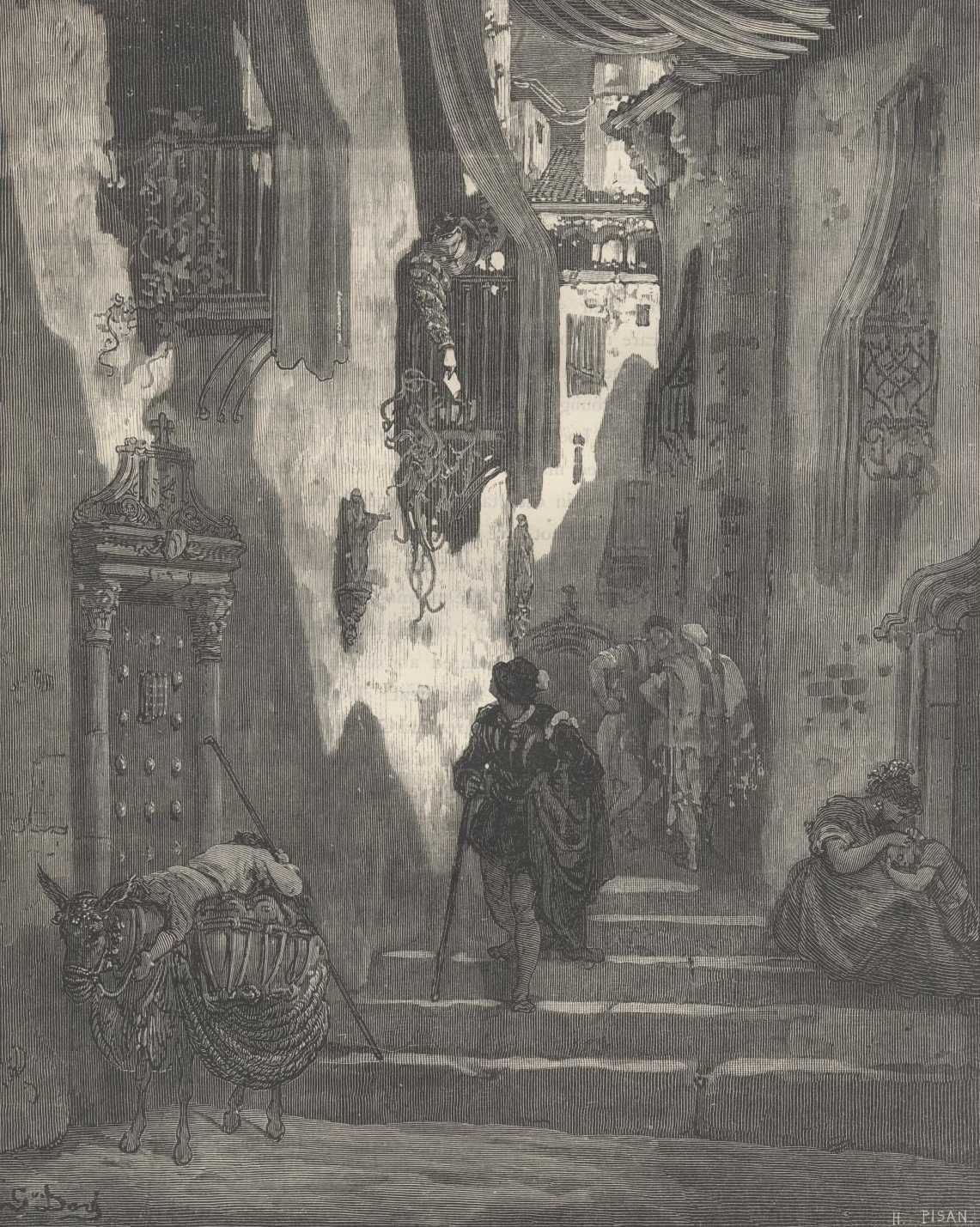

All this caution of mine, which he must have taken for coyness, had apparently the effect of increasing his wanton appetite—for that is the name I give to his passion for me; had it been what he declared it to be, you would not know of it now, because there would have been no occasion to tell you of it. At length he learned that my parents were contemplating marriage for me in order to put an end to his hopes of obtaining possession of me, or at least to secure additional protectors to watch over me, and this intelligence or suspicion made him act as you shall hear. One night, as I was in my chamber with no other companion than a damsel who waited on me, with the doors carefully locked lest my honour should be imperilled through any carelessness, I know not nor can conceive how it happened, but, with all this seclusion and these precautions, and in the solitude and silence of my retirement, I found him standing before me, a vision that so astounded me that it deprived my eyes of sight, and my tongue of speech. I had no power to utter a cry, nor, I think, did he give me time to utter one, as he immediately approached me, and taking me in his arms (for, overwhelmed as I was, I was powerless, I say, to help myself), he began to make such professions to me that I know not how falsehood could have had the power of dressing them up to seem so like truth; and the traitor contrived that his tears should vouch for his words, and his sighs for his sincerity.
I, a poor young creature alone, ill versed among my people in cases such as this, began, I know not how, to think all these lying protestations true, though without being moved by his sighs and tears to anything more than pure compassion; and so, as the first feeling of bewilderment passed away, and I began in some degree to recover myself, I said to him with more courage than I thought I could have possessed, ‘If, as I am now in your arms, señor, I were in the claws of a fierce lion, and my deliverance could be procured by doing or saying anything to the prejudice of my honour, it would no more be in my power to do it or say it, than it would be possible that what was should not have been; so then, if you hold my body clasped in your arms, I hold my soul secured by virtuous intentions, very different from yours, as you will see if you attempt to carry them into effect by force. I am your vassal, but I am not your slave; your nobility neither has nor should have any right to dishonour or degrade my humble birth; and low-born peasant as I am, I have my self-respect as much as you, a lord and gentleman: with me your violence will be to no purpose, your wealth will have no weight, your words will have no power to deceive me, nor your sighs or tears to soften me: were I to see any of the things I speak of in him whom my parents gave me as a husband, his will should be mine, and mine should be bounded by his; and my honour being preserved even though my inclinations were not would willingly yield him what you, señor, would now obtain by force; and this I say lest you should suppose that any but my lawful husband shall ever win anything of me.’ ‘If that,’ said this disloyal gentleman, ‘be the only scruple you feel, fairest Dorothea’ (for that is the name of this unhappy being), ‘see here I give you my hand to be yours, and let Heaven, from which nothing is hid, and this image of Our Lady you have here, be witnesses of this pledge.’
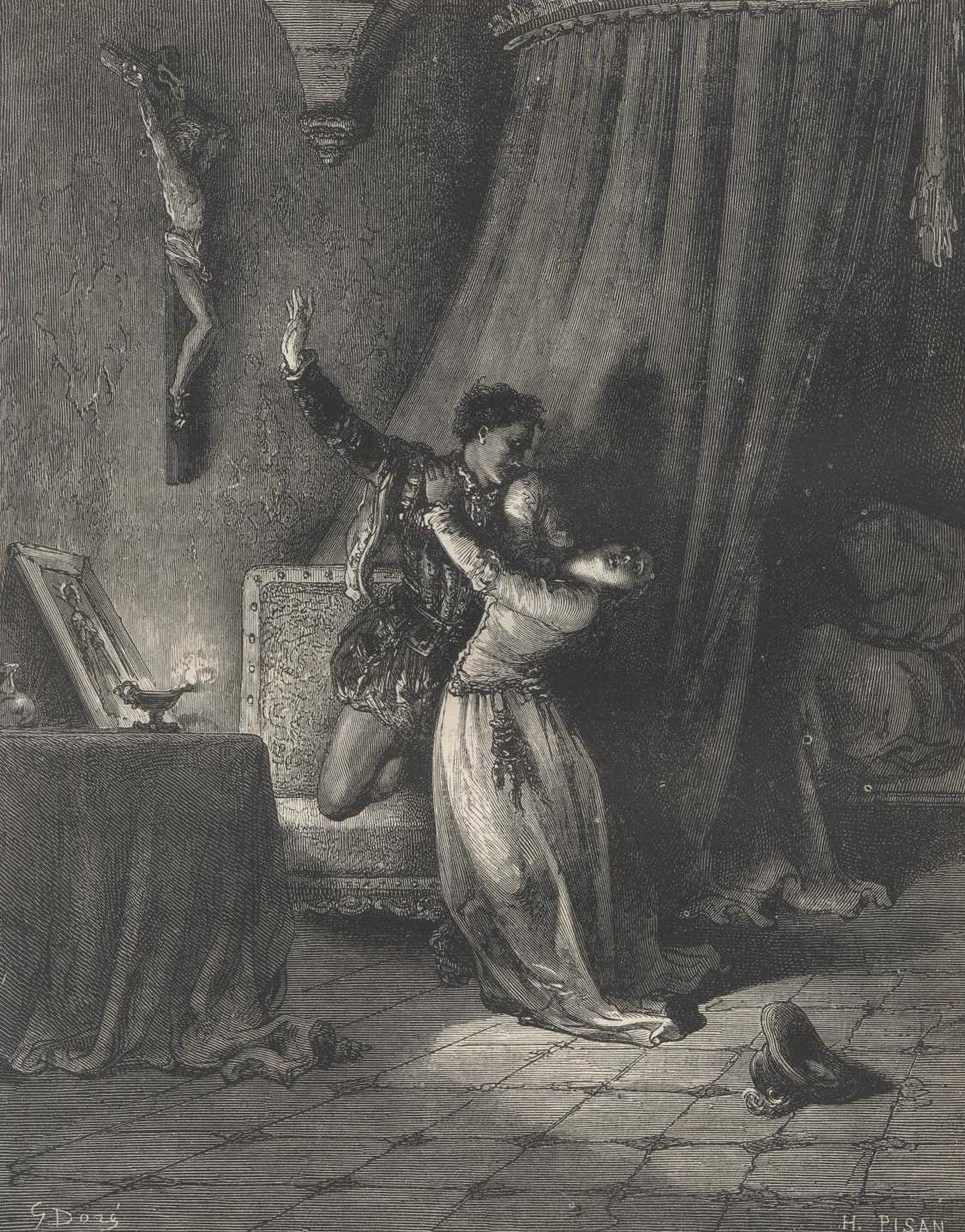

When Cardenio heard her say she was called Dorothea, he showed fresh agitation and felt convinced of the truth of his former suspicion, but he was unwilling to interrupt the story, and wished to hear the end of what he already all but knew, so he merely said:
“What! is Dorothea your name, señora? I have heard of another of the same name who can perhaps match your misfortunes. But proceed; by-and-by I may tell you something that will astonish you as much as it will excite your compassion.”
Dorothea was struck by Cardenio’s words as well as by his strange and miserable attire, and begged him if he knew anything concerning her to tell it to her at once, for if fortune had left her any blessing it was courage to bear whatever calamity might fall upon her, as she felt sure that none could reach her capable of increasing in any degree what she endured already.
“I would not let the occasion pass, señora,” replied Cardenio, “of telling you what I think, if what I suspect were the truth, but so far there has been no opportunity, nor is it of any importance to you to know it.”
“Be it as it may,” replied Dorothea, “what happened in my story was that Don Fernando, taking an image that stood in the chamber, placed it as a witness of our betrothal, and with the most binding words and extravagant oaths gave me his promise to become my husband; though before he had made an end of pledging himself I bade him consider well what he was doing, and think of the anger his father would feel at seeing him married to a peasant girl and one of his vassals; I told him not to let my beauty, such as it was, blind him, for that was not enough to furnish an excuse for his transgression; and if in the love he bore me he wished to do me any kindness, it would be to leave my lot to follow its course at the level my condition required; for marriages so unequal never brought happiness, nor did they continue long to afford the enjoyment they began with.
All this that I have now repeated I said to him, and much more which I cannot recollect; but it had no effect in inducing him to forego his purpose; he who has no intention of paying does not trouble himself about difficulties when he is striking the bargain. At the same time I argued the matter briefly in my own mind, saying to myself, ‘I shall not be the first who has risen through marriage from a lowly to a lofty station, nor will Don Fernando be the first whom beauty or, as is more likely, a blind attachment, has led to mate himself below his rank. Then, since I am introducing no new usage or practice, I may as well avail myself of the honour that chance offers me, for even though his inclination for me should not outlast the attainment of his wishes, I shall be, after all, his wife before God. And if I strive to repel him by scorn, I can see that, fair means failing, he is in a mood to use force, and I shall be left dishonoured and without any means of proving my innocence to those who cannot know how innocently I have come to be in this position; for what arguments would persuade my parents that this gentleman entered my chamber without my consent?’
All these questions and answers passed through my mind in a moment; but the oaths of Don Fernando, the witnesses he appealed to, the tears he shed, and lastly the charms of his person and his high-bred grace, which, accompanied by such signs of genuine love, might well have conquered a heart even more free and coy than mine—these were the things that more than all began to influence me and lead me unawares to my ruin. I called my waiting-maid to me, that there might be a witness on earth besides those in Heaven, and again Don Fernando renewed and repeated his oaths, invoked as witnesses fresh saints in addition to the former ones, called down upon himself a thousand curses hereafter should he fail to keep his promise, shed more tears, redoubled his sighs and pressed me closer in his arms, from which he had never allowed me to escape; and so I was left by my maid, and ceased to be one, and he became a traitor and a perjured man.
The day which followed the night of my misfortune did not come so quickly, I imagine, as Don Fernando wished, for when desire has attained its object, the greatest pleasure is to fly from the scene of pleasure. I say so because Don Fernando made all haste to leave me, and by the adroitness of my maid, who was indeed the one who had admitted him, gained the street before daybreak; but on taking leave of me he told me, though not with as much earnestness and fervour as when he came, that I might rest assured of his faith and of the sanctity and sincerity of his oaths; and to confirm his words he drew a rich ring off his finger and placed it upon mine. He then took his departure and I was left, I know not whether sorrowful or happy; all I can say is, I was left agitated and troubled in mind and almost bewildered by what had taken place, and I had not the spirit, or else it did not occur to me, to chide my maid for the treachery she had been guilty of in concealing Don Fernando in my chamber; for as yet I was unable to make up my mind whether what had befallen me was for good or evil. I told Don Fernando at parting, that as I was now his, he might see me on other nights in the same way, until it should be his pleasure to let the matter become known; but, except the following night, he came no more, nor for more than a month could I catch a glimpse of him in the street or in church, while I wearied myself with watching for one; although I knew he was in the town, and almost every day went out hunting, a pastime he was very fond of. I remember well how sad and dreary those days and hours were to me; I remember well how I began to doubt as they went by, and even to lose confidence in the faith of Don Fernando; and I remember, too, how my maid heard those words in reproof of her audacity that she had not heard before, and how I was forced to put a constraint on my tears and on the expression of my countenance, not to give my parents cause to ask me why I was so melancholy, and drive me to invent falsehoods in reply. But all this was suddenly brought to an end, for the time came when all such considerations were disregarded, and there was no further question of honour, when my patience gave way and the secret of my heart became known abroad. The reason was, that a few days later it was reported in the town that Don Fernando had been married in a neighbouring city to a maiden of rare beauty, the daughter of parents of distinguished position, though not so rich that her portion would entitle her to look for so brilliant a match; it was said, too, that her name was Luscinda, and that at the betrothal some strange things had happened.”
Cardenio heard the name of Luscinda, but he only shrugged his shoulders, bit his lips, bent his brows, and before long two streams of tears escaped from his eyes. Dorothea, however, did not interrupt her story, but went on in these words:
This sad intelligence reached my ears, and, instead of being struck with a chill, with such wrath and fury did my heart burn that I scarcely restrained myself from rushing out into the streets, crying aloud and proclaiming openly the perfidy and treachery of which I was the victim; but this transport of rage was for the time checked by a resolution I formed, to be carried out the same night, and that was to assume this dress, which I got from a servant of my father’s, one of the zagals, as they are called in farmhouses, to whom I confided the whole of my misfortune, and whom I entreated to accompany me to the city where I heard my enemy was. He, though he remonstrated with me for my boldness, and condemned my resolution, when he saw me bent upon my purpose, offered to bear me company, as he said, to the end of the world. I at once packed up in a linen pillow-case a woman’s dress, and some jewels and money to provide for emergencies, and in the silence of the night, without letting my treacherous maid know, I sallied forth from the house, accompanied by my servant and abundant anxieties, and on foot set out for the city, but borne as it were on wings by my eagerness to reach it, if not to prevent what I presumed to be already done, at least to call upon Don Fernando to tell me with what conscience he had done it. I reached my destination in two days and a half, and on entering the city inquired for the house of Luscinda’s parents. The first person I asked gave me more in reply than I sought to know; he showed me the house, and told me all that had occurred at the betrothal of the daughter of the family, an affair of such notoriety in the city that it was the talk of every knot of idlers in the street. He said that on the night of Don Fernando’s betrothal with Luscinda, as soon as she had consented to be his bride by saying ‘Yes,’ she was taken with a sudden fainting fit, and that on the bridegroom approaching to unlace the bosom of her dress to give her air, he found a paper in her own handwriting, in which she said and declared that she could not be Don Fernando’s bride, because she was already Cardenio’s, who, according to the man’s account, was a gentleman of distinction of the same city; and that if she had accepted Don Fernando, it was only in obedience to her parents. In short, he said, the words of the paper made it clear she meant to kill herself on the completion of the betrothal, and gave her reasons for putting an end to herself all which was confirmed, it was said, by a dagger they found somewhere in her clothes. On seeing this, Don Fernando, persuaded that Luscinda had befooled, slighted, and trifled with him, assailed her before she had recovered from her swoon, and tried to stab her with the dagger that had been found, and would have succeeded had not her parents and those who were present prevented him. It was said, moreover, that Don Fernando went away at once, and that Luscinda did not recover from her prostration until the next day, when she told her parents how she was really the bride of that Cardenio I have mentioned. I learned besides that Cardenio, according to report, had been present at the betrothal; and that upon seeing her betrothed contrary to his expectation, he had quitted the city in despair, leaving behind him a letter declaring the wrong Luscinda had done him, and his intention of going where no one should ever see him again. All this was a matter of notoriety in the city, and everyone spoke of it; especially when it became known that Luscinda was missing from her father’s house and from the city, for she was not to be found anywhere, to the distraction of her parents, who knew not what steps to take to recover her. What I learned revived my hopes, and I was better pleased not to have found Don Fernando than to find him married, for it seemed to me that the door was not yet entirely shut upon relief in my case, and I thought that perhaps Heaven had put this impediment in the way of the second marriage, to lead him to recognise his obligations under the former one, and reflect that as a Christian he was bound to consider his soul above all human objects. All this passed through my mind, and I strove to comfort myself without comfort, indulging in faint and distant hopes of cherishing that life that I now abhor.
But while I was in the city, uncertain what to do, as I could not find Don Fernando, I heard notice given by the public crier offering a great reward to anyone who should find me, and giving the particulars of my age and of the very dress I wore; and I heard it said that the lad who came with me had taken me away from my father’s house; a thing that cut me to the heart, showing how low my good name had fallen, since it was not enough that I should lose it by my flight, but they must add with whom I had fled, and that one so much beneath me and so unworthy of my consideration. The instant I heard the notice I quitted the city with my servant, who now began to show signs of wavering in his fidelity to me, and the same night, for fear of discovery, we entered the most thickly wooded part of these mountains. But, as is commonly said, one evil calls up another and the end of one misfortune is apt to be the beginning of one still greater, and so it proved in my case; for my worthy servant, until then so faithful and trusty when he found me in this lonely spot, moved more by his own villainy than by my beauty, sought to take advantage of the opportunity which these solitudes seemed to present him, and with little shame and less fear of God and respect for me, began to make overtures to me; and finding that I replied to the effrontery of his proposals with justly severe language, he laid aside the entreaties which he had employed at first, and began to use violence.
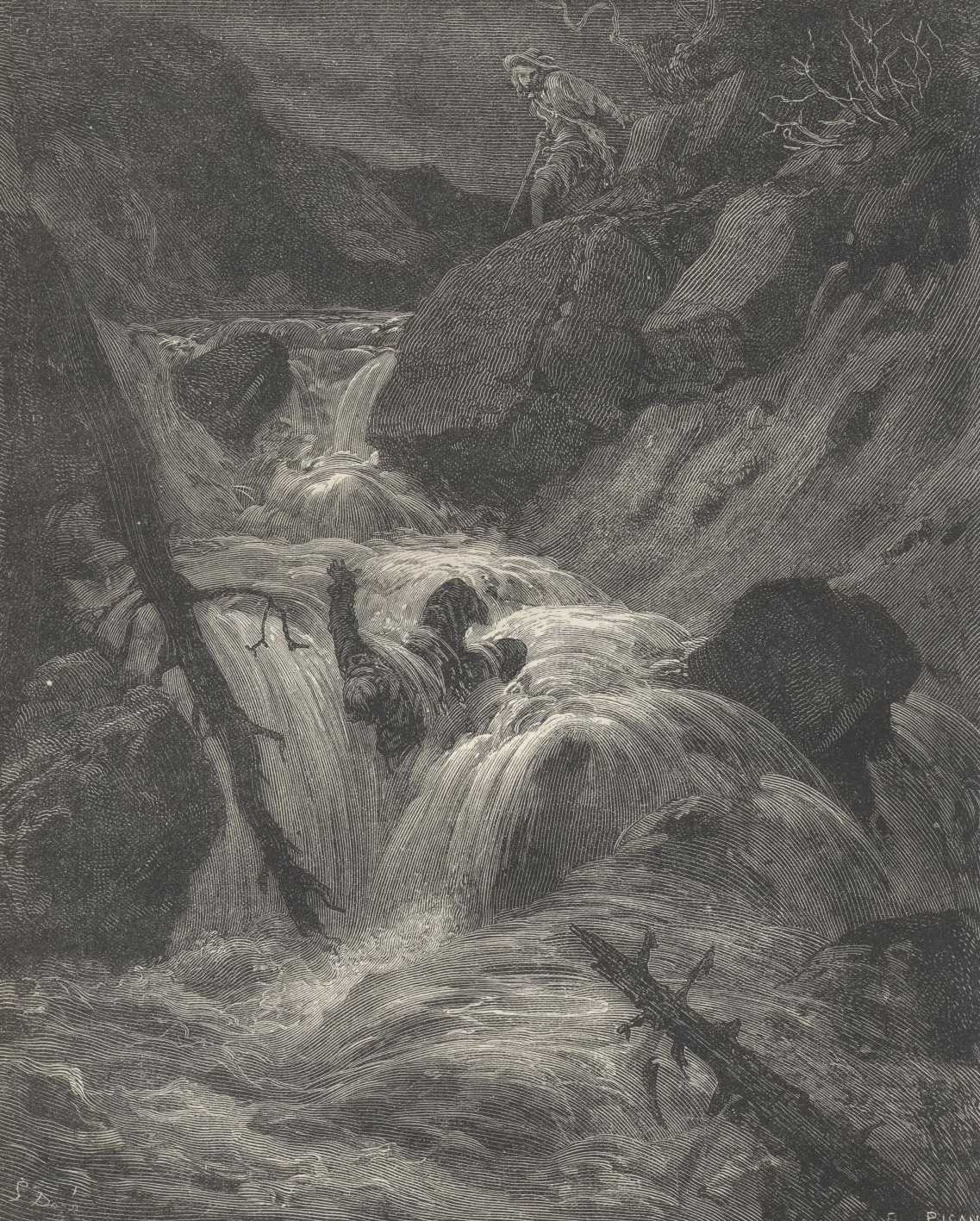

But just Heaven, that seldom fails to watch over and aid good intentions, so aided mine that with my slight strength and with little exertion I pushed him over a precipice, where I left him, whether dead or alive I know not; and then, with greater speed than seemed possible in my terror and fatigue, I made my way into the mountains, without any other thought or purpose save that of hiding myself among them, and escaping my father and those despatched in search of me by his orders. It is now I know not how many months since with this object I came here, where I met a herdsman who engaged me as his servant at a place in the heart of this Sierra, and all this time I have been serving him as herd, striving to keep always afield to hide these locks which have now unexpectedly betrayed me. But all my care and pains were unavailing, for my master made the discovery that I was not a man, and harboured the same base designs as my servant; and as fortune does not always supply a remedy in cases of difficulty, and I had no precipice or ravine at hand down which to fling the master and cure his passion, as I had in the servant’s case, I thought it a lesser evil to leave him and again conceal myself among these crags, than make trial of my strength and argument with him. So, as I say, once more I went into hiding to seek for some place where I might with sighs and tears implore Heaven to have pity on my misery, and grant me help and strength to escape from it, or let me die among the solitudes, leaving no trace of an unhappy being who, by no fault of hers, has furnished matter for talk and scandal at home and abroad.